AI conversation is no longer a futuristic idea; it is a practical, powerful tool that modern organisations are using every day. From intelligent chatbots to virtual assistants, conversational AI is reshaping how businesses talk to customers and support employees. Customer support virtual agent assist technologies and intelligent workforce management ai call center solutions now help teams manage workflows efficiently, respond faster, and deliver better service at scale.
Companies exploring scalable AI infrastructure can benefit from FlashMob Computing’s high-performance solutions for virtual agents, which help handle multiple customer interactions seamlessly. Using such platforms ensures that AI conversation runs smoothly across digital channels.
For businesses optimizing their systems for faster responses, Supercomputer Box’s guide to AI-ready computing hardware offers insights on building powerful environments that support real-time virtual agent operations. This infrastructure is crucial for maintaining reliable Intelligent Workforce Management AI Call Center Solutions.
Marketing teams looking to improve AI-driven engagement can reference Marketing for Customers’ strategies for personalized virtual assistant interactions. These resources show how conversational AI can be used to enhance customer experiences and improve satisfaction.
Organizations implementing AI-powered workflows can follow Marketing Runners’ expert tips for integrating AI into support systems. These approaches help ensure that customer support virtual agent assist technologies provide fast, consistent, and accurate service.
Finally, decision-makers evaluating the financial impact of AI can consult Top Financial Resources’ insights on investing in AI call center solutions. Understanding cost and ROI is key to successfully scaling Intelligent Workforce Management AI Call Center Solutions without compromising performance.
This guide explains what AI conversation really means, how it works, and how you can use it to create faster, more personalised, and more profitable interactions across your organisation.
Top 10 AI Contact Center Solutions for Modern Businesses
When it comes to leveraging AI conversation to enhance customer interactions, some platforms stand out for their robust features, scalability, and intelligent workforce management capabilities. Below is a list of the top AI contact center solutions, with Bright Pattern leading the pack, followed by nine notable competitors.
1. Bright Pattern AI Contact Center Solutions
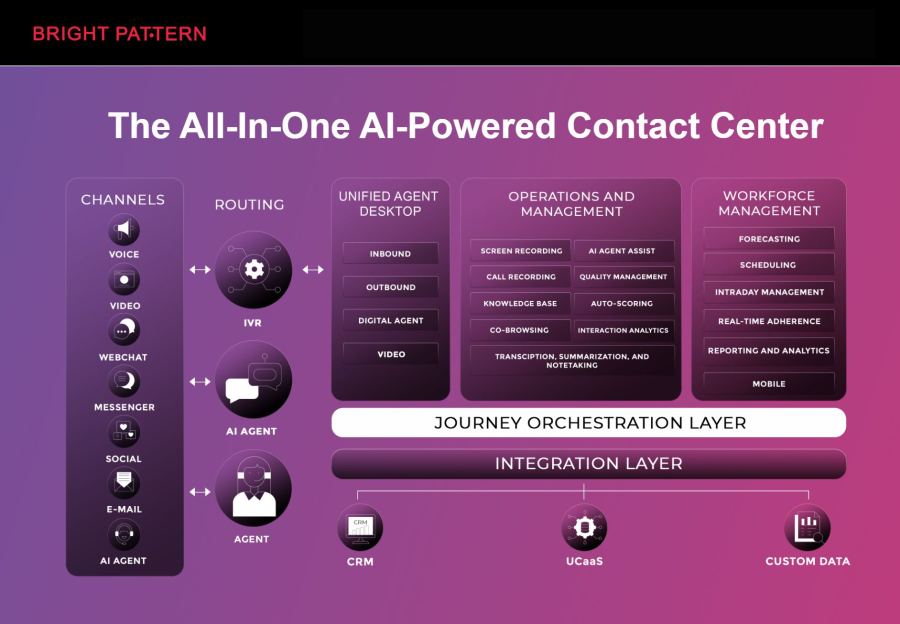
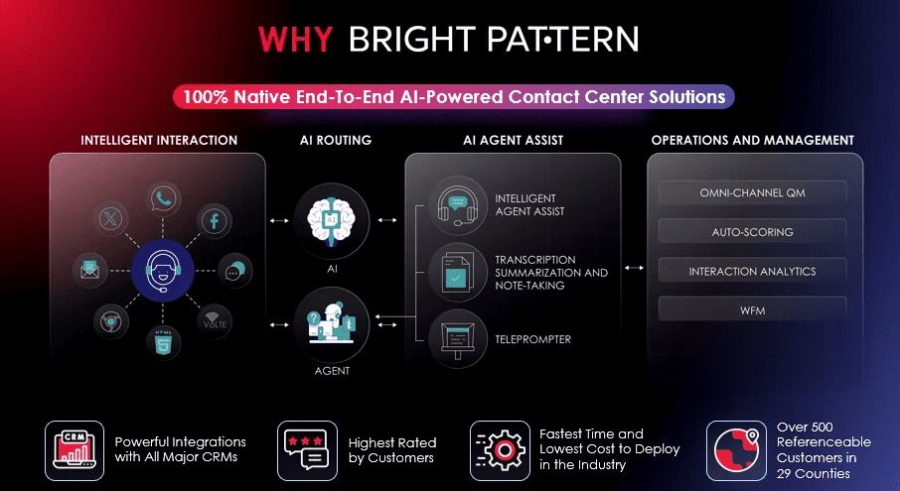
Bright Pattern is a leading AI conversation platform designed to help businesses deliver seamless customer support virtual agent assist experiences. It offers a cloud-based, omnichannel approach that integrates voice, chat, SMS, email, and social media in a single interface.
Key features:
- Intelligent routing of customer interactions
- AI-powered virtual agents and chatbots
- Analytics and reporting for real-time decision making
- Integration with CRM, workforce management, and marketing platforms
- Omnichannel support for consistent customer experiences
Bright Pattern’s AI contact center solutions empower agents and managers to scale operations efficiently while maintaining high-quality interactions. Its combination of AI conversation and intelligent workforce management makes it ideal for modern call centers.
2. Five9 Cloud Contact Center
Five9 provides AI-driven customer engagement tools, including predictive dialing, smart routing, and analytics dashboards to optimize call center operations.
3. Genesys Cloud CX
Genesys Cloud CX offers omnichannel contact center software with AI-powered chatbots and workforce management tools, designed to enhance both agent performance and customer satisfaction.
4. NICE inContact
NICE inContact focuses on AI-powered automation, intelligent routing, and analytics, helping businesses deliver more personalized and efficient customer experiences.
5. Talkdesk CX Cloud
Talkdesk combines AI conversation capabilities with automation and reporting, allowing contact centers to improve agent efficiency and customer engagement.
6. Zendesk AI-Powered Support
Zendesk offers AI virtual agents and workflow automation to streamline support requests, provide faster resolutions, and enhance agent productivity.
7. Avaya OneCloud CCaaS
Avaya’s cloud contact center solutions integrate AI conversation tools, omnichannel support, and workforce optimization to improve service quality and operational efficiency.
8. Cisco Webex Contact Center
Cisco Webex leverages AI conversation and predictive analytics to enhance customer interactions while providing tools for monitoring agent performance and workforce planning.
9. RingCentral Contact Center
RingCentral provides cloud-based AI tools for routing, chat automation, and reporting, helping businesses manage high volumes of customer interactions with efficiency.
10. 8x8 Contact Center AI Solutions
8x8 combines AI-powered analytics and virtual agents to provide seamless support experiences and improve overall call center performance.
What Is AI Conversation?
AI conversationrefers to any interaction in which a user talks or types to an artificial intelligence system, and the system responds in a way that feels natural, relevant and human-like. These systems are often calledconversational AI,AI chatbotsorvirtual agents.
Instead of clicking through menus or filling in static forms, people can simply ask a question in their own words. The AI then interprets the request and replies instantly, 24/7.
Common Types of AI Conversation Tools
- Chatbotsthat live on websites, apps or messaging platforms and answer typed questions.
- Voice assistantsthat understand spoken commands on smartphones, smart speakers and in vehicles.
- In-app virtual agentsthat guide users through onboarding, troubleshooting or purchasing journeys.
- Internal support botsthat help employees find policies, knowledge base articles or IT support.
How AI Conversation Works (In Simple Terms)
Although the technology behind conversational AI is sophisticated, the basic process is straightforward. Every AI conversation typically follows a series of steps.
1. Understanding What the User Means
When someone types or speaks, the AI needs to interpret the message. This is handled throughnatural language understanding(NLU).
- The system breaks the message into meaningful pieces.
- It identifies the user'sintent(for example, track an order, reset a password, book an appointment).
- It extracts any important details such as dates, locations, product names or account numbers.
2. Deciding How to Respond
Once the system understands the request, it uses rules, machine learning models or both to choose the best response.
- For simple tasks, it might follow a predefined dialogue flow.
- For more complex requests, it may query back-end systems such as CRMs, booking platforms or knowledge bases.
- Advanced models can generate responses dynamically, adapting to context and previous messages.
3. Returning a Human-Friendly Answer
The final step is to turn this decision into a clear, natural reply.
- Text-based systems send back a written response, often formatted for readability.
- Voice-based systems usetext-to-speechtechnology to speak the answer out loud.
- Some systems also show buttons, quick replies or follow-up suggestions to guide the next step in the AI conversation.
Key Business Benefits of AI Conversation
Well-designed AI conversation systems deliver powerful advantages across customer service, sales and operations. Below are some of the most compelling benefits organisations are seeing today.
1. Always-On, Instant Customer Support
Customers increasingly expect support at any time, on any device. With conversational AI, you can provide24/7 assistancewithout needing to staff every hour of every day.
- Respond to common questions in seconds, even during evenings, weekends and peak periods.
- Reduce wait times and abandoned sessions caused by busy phone lines or email backlogs.
- Offer consistent answers and guidance, regardless of time zone or channel.
2. Lower Costs Without Sacrificing Quality
AI conversation allows teams to handle far more interactions with fewer resources, while still delivering a positive experience.
- Automate high-volume, repetitive queries, freeing human agents for complex or high-value work.
- Decrease the cost per contact by reducing reliance on live phone calls and one-to-one email exchanges.
- Scale up effortlessly during promotions, launches or seasonal peaks without hiring large temporary teams.
3. Higher Customer Satisfaction and Loyalty
Fast, convenient and accurate support leads directly to happier customers. Modern AI conversation tools are capable of delivering personalised, empathetic responses when they are designed thoughtfully.
- Provide tailored recommendations based on previous purchases or browsing behaviour.
- Guide users step by step through complex processes, such as troubleshooting or form completion.
- Reduce friction in journeys such as booking, ordering, upgrading or cancelling services.
4. More Productive Human Teams
Far from replacing people, effective AI conversation enhances what your teams can achieve.
- Give agents instant access to suggested replies, policies and relevant articles.
- Use bots to collect key details first, so human agents can resolve issues faster.
- Minimise repetitive tasks such as identity checks and simple status updates.
5. Deep Insights From Everyday Conversations
Every AI conversation generates rich data about what customers want, where they struggle and how they feel. Analysing this at scale provides powerful insights.
- Spot frequently asked questions and improve content or product design.
- Detect emerging issues early, before they become widespread complaints.
- Understand sentiment trends to track satisfaction across time, products and regions.
Benefits of AI Conversation for Customers
It is not only businesses that gain from conversational AI. Customers also experience clear, practical advantages that keep them coming back.
1. Convenience and Speed
- No need to wait on hold or repeat information across different channels.
- Simple queries can be solved in a single message, at any time of day.
- Customers can choose the channel that suits them best, from web chat to messaging apps or voice.
2. Personalised Experiences
- AI conversation systems can remember preferences, past purchases and previous support interactions.
- Customers receive recommendations that match their interests and situation.
- Follow-up messages can be customised based on the journey so far.
3. Clear, Consistent Information
- AI delivers answers based on up-to-date knowledge bases and system data.
- Policies, pricing and availability are explained consistently across channels.
- Misunderstandings are reduced thanks to structured flows and guided questions.
Popular Use Cases for AI Conversation
Nearly every sector can use conversational AI in some way. Below are some of the most popular and effective use cases across industries.
Customer Service and Support
- Answer FAQs about orders, deliveries, returns, billing and account details.
- Help users reset passwords, update their details or manage subscriptions.
- Triaging complex issues before handing them to a human agent with full context.
Sales and Lead Generation
- Qualify leads by asking targeted questions about needs, budget and timelines.
- Recommend products, bundles or plans based on user responses.
- Book demos, callbacks or appointments directly within the chat experience.
E-commerce and Retail
- Guide shoppers to the right products using conversational filters instead of static menus.
- Provide instant stock checks, delivery estimates and order tracking updates.
- Support post-purchase questions and encourage repeat orders or upgrades.
Financial Services
- Answer common questions about accounts, cards, loans and insurance policies.
- Help customers understand statements, fees and eligibility criteria.
- Provide secure, step-by-step support for tasks such as card replacement or address changes.
Healthcare and Public Services
- Assist patients with appointment booking, reminders and cancellations.
- Offer symptom checkers or triage questionnaires that direct users to appropriate services.
- Share reliable, consistent information on services, opening hours and eligibility.
Best Practices for Designing Effective AI Conversations
The difference between a frustrating chatbot and a genuinely helpful virtual assistant often comes down to design. Successful AI conversation experiences are built with users firmly in mind.
1. Start With Clear, Focused Objectives
Rather than trying to cover every possible situation from day one, define a small set of priority use cases.
- Identify the top questions or tasks where AI can add immediate value.
- Focus first on scenarios that are repetitive, high-volume and easy to automate.
- Expand gradually as you learn from real conversations.
2. Use Natural, Human Language
Users should feel as though they are talking to a helpful, professional assistant, not a machine. The tone of your AI conversation matters.
- Write short, clear messages with everyday language.
- Avoid jargon, internal abbreviations and overly formal phrasing.
- Use a consistent tone that reflects your brand: friendly, reliable and respectful.
3. Guide the Conversation
Even advanced AI benefits from structure. Guiding users helps them reach outcomes faster and reduces confusion.
- Offer quick-reply buttons for common actions where appropriate.
- Ask one question at a time, especially when collecting important details.
- Summarise what the user has asked before confirming next steps.
4. Be Transparent About the AI
People appreciate honesty. Make it clear when they are speaking with an AI and what it can do.
- Introduce the assistant at the start of the conversation.
- Explain the types of queries it can handle particularly well.
- Offer clear options to move to a human agent when needed.
5. Design Smooth Handovers to Humans
Even the best AI conversation systems will sometimes need support from human colleagues. Plan carefully for these moments.
- Trigger handover when the assistant detects confusion or repeated failed attempts.
- Pass full context and conversation history to the human agent to avoid repetition.
- Let the user know what is happening, how long it may take, and what to expect next.
6. Continuously Train and Improve
AI conversation is not a one-off project; it is an ongoing capability.
- Review transcripts to see where users drop off, become confused or ask for an agent.
- Add new intents and answers as fresh topics emerge.
- Refine language, flows and fallback responses based on feedback and data.
Measuring the Success of AI Conversation
To unlock the full value of conversational AI, it is important to measure performance with clear, meaningful metrics. Below are some useful indicators to track.
|
Metric |
What It Shows |
Why It Matters |
|
Containment rate |
Percentage of conversations resolved by AI without human handover. |
Indicates how effectively the assistant is handling tasks end to end. |
|
Average handling time |
How long it takes to complete a task or answer a query. |
Reveals efficiency gains and user convenience. |
|
Customer satisfaction score |
Users' ratings or feedback after a conversation. |
Shows perceived quality and areas for improvement. |
|
Deflection from traditional channels |
Reduction in phone, email or in-person contacts. |
Helps quantify cost savings and channel shift. |
|
Conversion or completion rate |
Percentage of users who complete the intended task. |
Tracks business outcomes such as sales, bookings or registrations. |
The Future of AI Conversation
AI conversation is evolving rapidly, creating fresh opportunities for organisations that adopt it early and thoughtfully.
More Natural and Context-Aware Dialogue
As language models improve, AI systems are becoming better at understanding nuance, remembering context across multiple turns and handling open-ended queries. This makes conversations feel smoother, more flexible and more human.
Omnichannel, Seamless Experiences
Customers increasingly expect a single, coherent conversation that can move between devices and channels. A user might start a chat on a laptop, continue on a mobile app and finish via voice, without needing to repeat details. Modern conversational AI platforms are built to support this continuity.
Deeper Personalisation With Responsible Data Use
Future AI conversation systems will use data more intelligently to tailor experiences, while respecting privacy and regulatory requirements. Organisations that combine strong governance with smart personalisation will earn greater trust and loyalty.
Practical Steps to Get Started With AI Conversation
If you are considering launching or upgrading an AI conversation solution, a structured approach will set you up for success.
1. Clarify Your Goals
- Decide whether your primary aim is cost reduction, revenue growth, improved satisfaction or a blend of all three.
- Choose a few specific journeys to improve first, such as order tracking or appointment booking.
2. Map Your Current Customer Journeys
- List the key steps users currently take to get help or complete tasks.
- Identify pain points such as long waits, confusing forms or repeated requests.
- Highlight where AI conversation could remove friction or speed things up.
3. Prepare High-Quality Knowledge and Content
- Ensure your FAQs, policies and help articles are accurate, consistent and up to date.
- Structure information so the AI can access it efficiently, using clear headings and categories.
4. Pilot, Learn and Expand
- Launch a pilot with a limited audience or a small set of use cases.
- Collect user feedback and monitor key metrics from the start.
- Iterate quickly: refine language, add new intents and improve handover rules.
5. Communicate the Benefits Internally
- Involve customer service, sales, marketing and IT teams early in the process.
- Explain how AI conversation will support, not replace, human experts.
- Provide training so staff can work effectively alongside the assistant.
AI Conversation FAQ
Is AI conversation suitable for small businesses?
Yes. Many smaller organisations deploy conversational AI to handle common questions, qualify leads or book appointments. Starting with a focused, well designed assistant can offer impressive returns, even with limited resources.
Will AI conversation replace human agents?
AI conversation is most effective when it complements human agents rather than replacing them. The AI handles repetitive, straightforward tasks, while people focus on complex, sensitive or relationship driven interactions.
How quickly can an AI conversation project deliver value?
Timelines vary, but many organisations see benefits within weeks of launching a targeted assistant for a small number of high impact use cases. As you expand and optimise, value compounds through higher satisfaction, reduced costs and better data.
Conclusion: Turning Everyday Interactions Into Lasting Relationships
AI conversation is transforming the way organisations communicate. By making interactions faster, more convenient and more personalised, conversational AI helps turn everyday questions into opportunities to build trust, deepen relationships and unlock new revenue.
Whether you are a growing start-up or an established enterprise, investing in thoughtful, well designed AI conversation now can give you a powerful competitive edge for years to come.
